NIBE expands VayuAstra UAV family with 1000km range Munitions
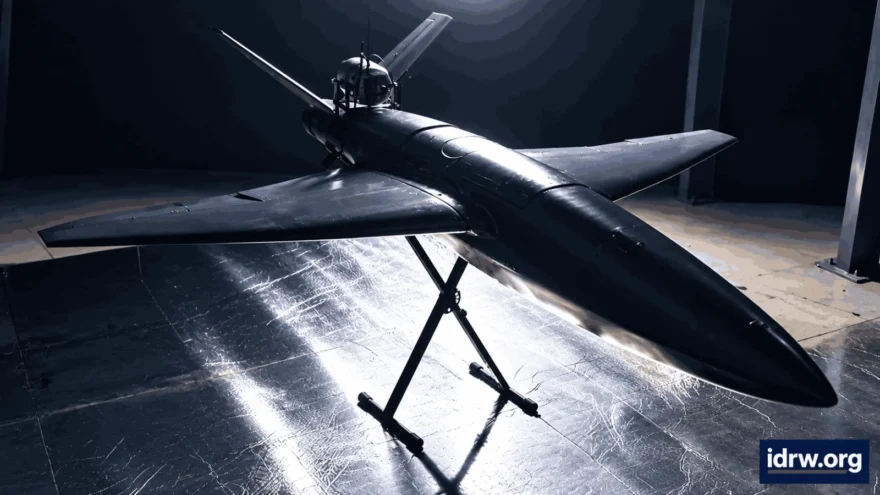
NIBE has significantly expanded its VayuAstra loitering munition range with two new systems, the VayuAstra-II and VayuAstra-III, offering strike capabilities of up to 300 km and 1,000 km respectively. NIBE Limited, based in Pune, is signaling its intent to develop a full family of long-range, un-manned strike systems for the Indian Armed Forces, following the successful trials of the VayuAstra-I platform.
The VayuAstra-II, known as VAYU-BANN, is a loitering UAV designed with a 300 km strike range, a 1.5-hour endurance, and a 7 kg payload. To simplify maintenance and logistics, this system utilizes a commercially available propulsion engine.
The larger VayuAstra-III is positioned as a long-range variant, boasting a strike range of 1,000 km and a substantial 40 kg payload capacity. It is powered by a commercially available 550cc engine producing 46hp, making it suitable for demanding long-duration missions requiring heavy payload options.
Eligibility and Technical Specifications
Both new systems feature advanced navigation capabilities, utilizing optical and inertial sensors to maintain accuracy in GNSS-restricted environments. NIBE emphasizes operational robustness through double redundant communication, rail launch capabilities, and containerized transport solutions. The systems are modular, allowing them to be configured for land, air, and maritime applications based on client needs.
These new variants represent a major leap forward from the original 100 km range demonstrated by the VayuAstra-I platform, which NIBE had previously showcased in response to the Indian Army’s requirement for short-range loitering munitions.
The core technical features of the expansion include:
- VayuAstra-II: 300 km range, 7 kg payload, 1.5 hour endurance.
- VayuAstra-III: 1,000 km range, 40 kg payload, 46hp engine.
- Both systems use optical and inertial sensors for accurate navigation.
- Features include double redundant communication and rail launch options.
Accessing Information and Future Development
NIBE is highlighting its commitment to indigenous defense technology, noting that the VayuAstra-I platform was developed and manufactured in India after a technology transfer from an Israeli loitering munition firm. This success is seen as a crucial step in NIBE entering the domestic loitering munitions market.
While the published specifications describe the system’s capabilities, NIBE advises readers to consider them as the company’s stated claims rather than independently verified performance metrics. The company has not yet released results of any trials, customer orders, production schedules, or operational fitness for the VayuAstra-II and Vayuastra-III.
What are the key technical differences between VayuAstra-II and VayuAstra-III?
VayuAstra-II features a 300 km range and a 7 kg payload, while VayuAstra-III is the long-range variant with a 1,000 km strike range and a 40 kg payload.
Has NIBE released any operational results for these new models?
No. NIBE stated that the published specifications are the company's claims, and they have not yet released any independent verification tests, customer orders, or operational fitness data.